Enter your details and we will send the requested document to your inbox.





Flame retardant wool fabric combines one of nature’s few inherently fire-resistant fibers with the practical demands of contract and commercial interiors. Whether you specify it for hotel upholstery, aviation seating, or high-end protective garments, wool brings self-extinguishing behavior that most synthetics can only imitate with chemical treatments. This guide walks through why wool resists fire at the fiber level, how it is processed, where it is used, and what standards buyers should verify before placing an order.
Featured snippet: Flame retardant wool fabric is made from sheep’s wool, a protein fiber that ignites only around 570–600°C, chars instead of melting, and self-extinguishes once the flame source is removed. Its natural fire resistance needs no chemical finish, though mills often add durable treatments to hit contract-grade certification.
Wool is a keratin protein fiber, and that chemistry is exactly why flame retardant wool fabric performs so well near heat. Unlike polyester or nylon, which are petroleum-derived and melt into burning drips, wool has a high limiting oxygen index and a high ignition temperature—typically around 570–600°C before it will even catch. When it does burn, it forms a self-insulating char layer and tends to extinguish on its own once the ignition source is gone.
This matters for buyers because the protection is built in, not applied. A wool curtain or seat cover does not rely on a surface coating that can wash out over time. The fiber’s structure also traps air, which slows heat transfer and gives wool its well-known slow-burn profile. For a deeper look at inherent versus treated options, see our comparison of inherent vs. treated flame-retardant fabrics.

Turning raw fleece into a finished FR wool textile follows the same broad route as any woven wool, with extra attention paid to preserving fire performance at every stage:
The key point for specifiers is consistency: every batch must hold the same limiting oxygen index and char behavior, which is why reputable mills document each run. If your project also calls for inherently flame-retardant synthetics, our inherent FR polyester fabric is a common companion material in mixed-fiber specifications.
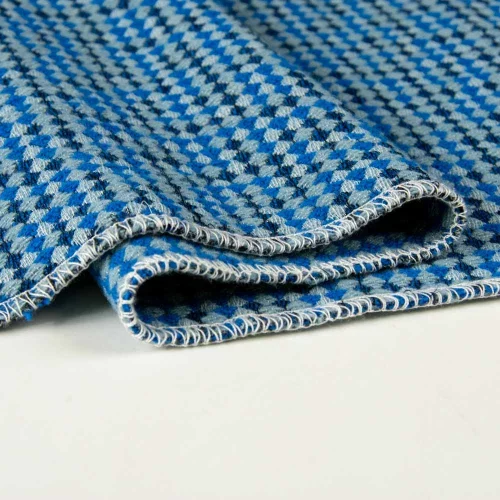
Wool’s appeal goes beyond fire safety. Its natural crimp gives it elasticity, so it recovers shape after stretching—useful in upholstery that gets sat on daily. The same fiber structure makes wool feel soft against skin, which is why it shows up in both protective workwear and luxury garments. It is also naturally resistant to stains and odors, cutting down on cleaning frequency and helping the flame-retardant properties last longer between services.
Durability is the other headline benefit. A wool FR textile that is spun, woven, and finished correctly will hold its strength through years of commercial use. Buyers get a material that is safe, long-lived, and comfortable at once—a combination that is hard to beat for spaces where people gather.
In practice, flame retardant wool fabric earns its place anywhere a combination of appearance and fire safety is non-negotiable. Home and hospitality settings use it for upholstery and area rugs, where the warm look of wool pairs with peace of mind near candles or heating. Contract curtains and drapes are another mainstay, adding a layer of safety to lobbies and guest rooms.
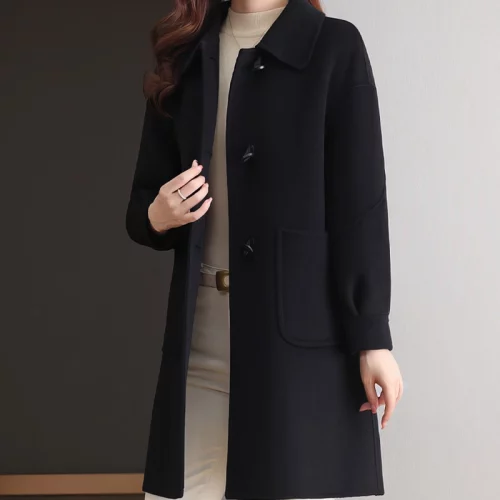
Transport is a demanding proving ground. Aviation-grade seating relies on materials that meet strict burn-through limits, and wool blends are a frequent choice; for nylon-based aviation specs we stock flame-retardant nylon fabric at 300 gsm. At the garment end, BEGOODTEX 100% wool fabric for clothing interweaves conductive fibers for both style and protection in high-end apparel.
No single fiber wins every project, so it helps to see wool next to the usual alternatives:
| Fiber | Fire behavior | Comfort | Typical use |
| Wool | Self-extinguishing, no melt-drip | Soft, breathable | Upholstery, garments, drapes |
| Aramid | Extremely heat-stable | Stiff, technical feel | Protective workwear |
| FR cotton | Treated to self-extinguish | Soft, familiar | Workwear, hospitality |
| IFR polyester | Inherent FR, lightweight | Smooth, less warm | Curtains, backdrops |
Wool’s edge is the blend of natural safety and wearability. Where weight or cost rules, inherent FR polyester often takes over; where certification and hand-feel matter most, wool stays the default.
Start with the end use, because that decides the fire standard, weight, and finish you need. A hotel drape and an aircraft seat cover are governed by different tests, so match the spec to the room. Weight is the next lever: heavier cloth (say 400–600 gsm) brings durability and body for seating, while lighter weights suit garments that must move and breathe.
Appearance and texture come last but are far from trivial. Wool can be finished to look formal or rustic, and blending it with FR polyester adds design range without losing protection. If you are weighing wool against other options for a specific room, our flame-retardant fabric selection guide breaks the decision down by application.
 Inherent Flame Retardant Wool-Polyamide Jacquard Fabric with Wear Resistance for Transport Interiors | 600 g/m² | 140 cm | UIC 564-2
 Durable Inherent Flame Retardant Blue Wool-Blend Textile with Wear Resistance for Rail and Aircraft Interior Seating | 840 g/m² | 146 cm
 Inherent Flame Retardant Aviation-Grade Wool-Blend W/N+C+T Fabric in Blue with Wear Resistance for Transport Interiors | 840 g/m² | 146 cm
Good maintenance keeps the fire performance of any flame retardant wool fabric intact. Vacuum regularly to stop dust from embedding in the weave, and treat spills promptly with a wool-safe cleaner before they set. The two habits to avoid are harsh chemicals—which can strip a durable FR finish—and prolonged direct sun, which slowly weakens fibers and fades color. Store roll goods in a cool, dry place; high humidity is the quiet enemy of wool’s strength.
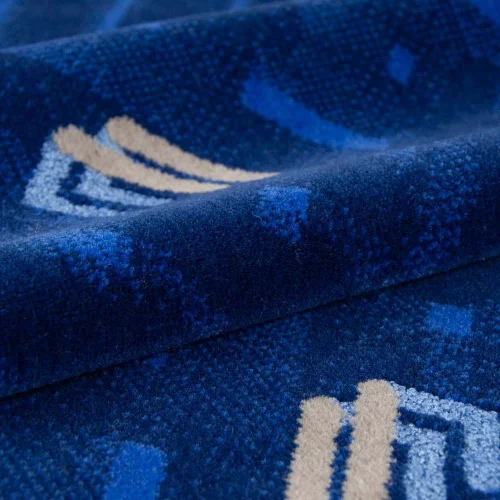
BEGOODTEX wool FR textiles are built for consistent, documented performance across a wide range of contract uses—from protective workwear to residential and hospitality decor. Appearance is not sacrificed for safety: buyers can choose weaves and finishes that fit the room’s design language. Every run is checked against recognized benchmarks, and you can review the actual certification and test reports we hold, including:
Yes. Wool is naturally flame-retardant: it has a high ignition temperature, chars instead of melting, and self-extinguishes when the flame source is removed. Synthetic fibers, by contrast, form hard molten beads and can drip burning material.
Wool floor coverings are commonly assessed with ASTM D2859, the standard test for the flammability of textile floor coverings. Always ask the supplier for the specific test report and the standard it was judged against—see ASTM’s overview of D2859 for the scope.
Contract-grade wool FR fabric can meet BS 5852 Crib 5 and EN 13501-1 E when finished and tested to those benchmarks. Confirm the exact classification with the mill’s certificate, since the result depends on the specific finish and fabric weight.
Natural wool is already self-extinguishing, so a “treated” wool usually means a durable finish added to hit a stricter contract standard. Choose natural wool for inherent safety and treated wool when a specific certification (e.g., Crib 5) is required by the spec.
Yes, but gently. Use wool-safe detergent and avoid bleach or strong solvents that can break down a durable FR finish. Many contract wool textiles are dry-clean or low-temperature machine wash only—follow the care label and the supplier’s guidance.
Flame retardant wool fabric is a rare case of a material that is both safe and pleasant to live with. Its fiber-level fire resistance needs no coating to exist, it wears comfortably, and it lasts. To put it to work:
For the full range of certified options, browse our wool fabric collection or the broader flame-retardant fabric hub.
Related reading


